- Category
- Productivity
- Developer
- Semrush Holdings, Inc.
- Website
- (opens in a new window)
How it works
The Semrush MCP provides structured, quantitative SEO and traffic data for domains, keywords, backlinks, and market-level audience insights. It returns factual datasets including domain analytics, keyword metrics, backlink profiles, traffic data across time periods and channels, geographic and demographic distributions, and competitive or industry-level indicators. The model should invoke this MCP whenever a user requests website metrics, traffic statistics, keyword data, competitor comparisons, or market/audience breakdowns that require authoritative data rather than inference. It should also be used when a user’s question requires data-driven evaluation of a specific domain, even if the query is phrased as advice or improvement guidance.
What else can you do?
Explore site and keyword metrics
Semrush Find keyword opportunities for a fintech blog focused on small business lending and prioritize by difficulty and intent.
Review competitor performance
Semrush Compare these competitor domains over the last 30 days. Highlight who's gaining or losing, key drivers of performance, biggest gaps vs. us, and 3 recommended actions.
Summarize SEO and traffic data
Semrush Run a technical SEO audit summary and give me the top fixes that will move organic traffic fastest.
What’s included
App
Semrush
Resources
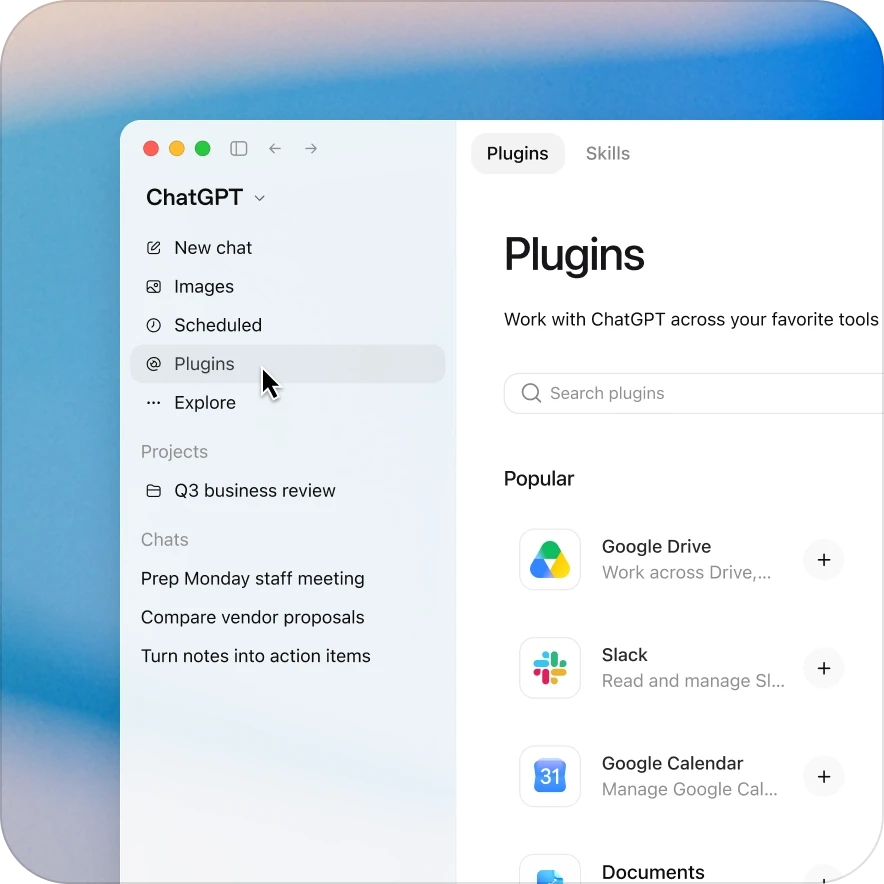
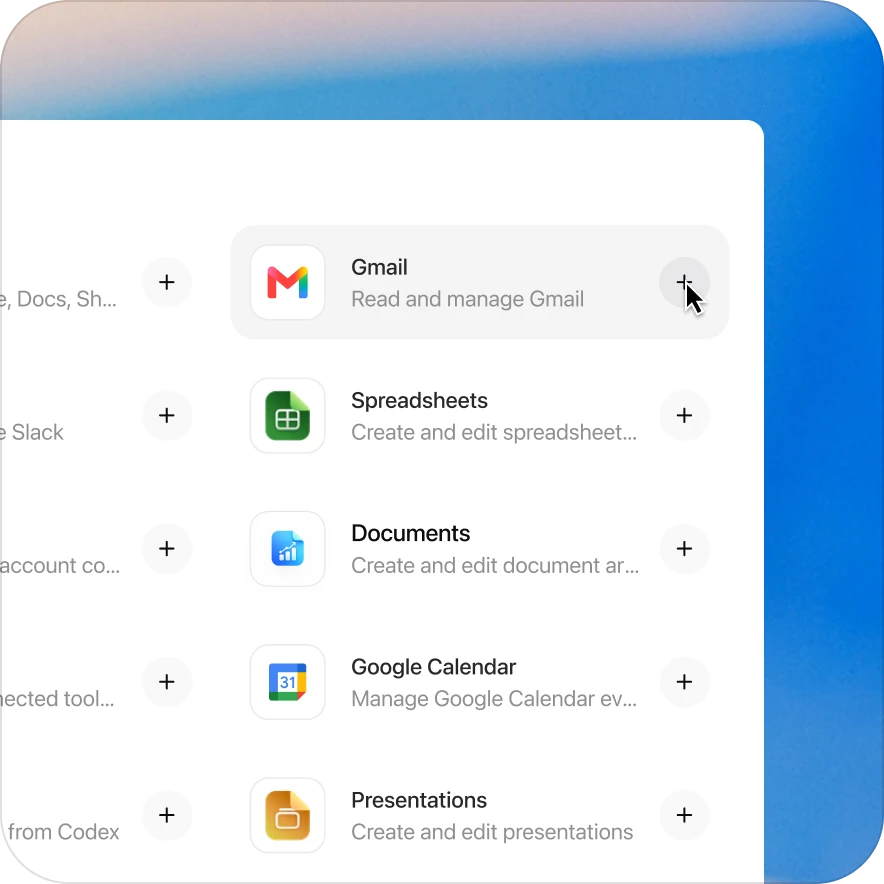
Add the Semrush plugin in a few clicks
Availability depends on the plugin, your plan, and workspace settings. Some connections require admin setup or approval. Contact your workspace admin if access is blocked.
Explore related plugins
Data
Answer questions with data
Creative Production
Use the Creative Production plugin in ChatGPT to create, adapt, and review marketing assets, campaign concepts, ads, and launch creative
Similarweb
Web, app, search & market data
Conductor
Analyze AI search data
Intuit Mailchimp
Create marketing campaigns
Canva
Search, create, and edit designs